Table of contents
Socialism Simple Definition
Welcome to Socialism explained, your ‘go to guide’ for an introductory understanding of this leftist ideology.
Socialism calls for public rather than private ownership of the ‘means of production’. This is based on the belief that everyone who contributes to the production of a good, is entitled to a share in it. Therefore, society as a whole should own, or at least control property for the benefit of all.
It has been said there are as many theories of socialism as there are socialists. As a result of the failings of authoritarian Soviet style ‘state socialism’, modern socialists often use the term ‘democratic socialism’ to promote advocacy of their cause.
Socialism vs Communism
Both socialism and communism are political and economic ideologies that call for collective ownership and the redistribution of wealth. Socialism seeks to reduce income inequality and provide social welfare through state intervention and public ownership of key industries, allowing for a mixed economy where both private and public sectors coexist.
In contrast, communism aims for a classless society in which all property is communally owned, eliminating private ownership entirely. Communism envisions a revolutionary transition to this state, often associated with a one-party system, while socialism can exist within democratic frameworks, permitting various political expressions and market mechanisms.
Socialism Characteristics
However, a more basic explanation of socialism often helps to garner wider appeal. Consequently, Senator Bernie Sanders has defined democratic socialism as “the understanding that all of our people live in security and dignity” and “a government and an economy and a society which works for all.”
Congresswoman Alexandria Ocasio-Cortez defines it as “democratic participation in our economic dignity.”

Marxism and Socialism
Capitalism has existed for a number of centuries. However, the Industrial revolution of the 18th century saw capitalism grow at unprecedented levels. The poverty experienced by workers showed the stark contrast in the position of the classes. The ruling class of the day enjoyed unprecedented wealth.
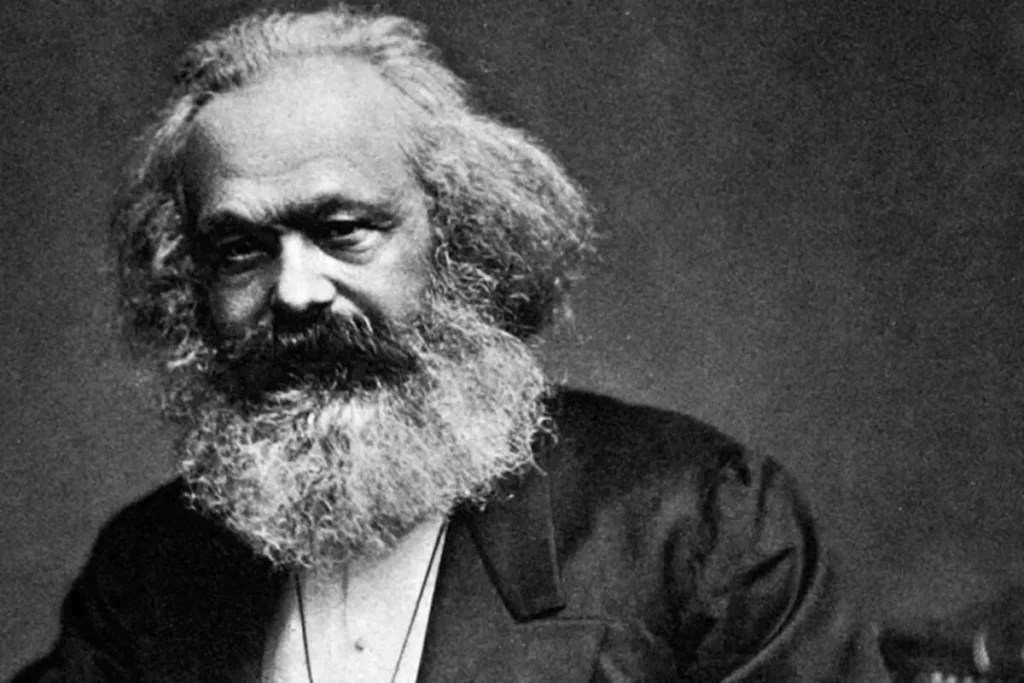
Karl Marx (1818 – 1883) called for all those who contribute to the production process, to share in the profits created. As a result, he said the ‘means of production’ must be owned by society as-a-whole. He wrote the world changing Das Kapital and together with Friedrich Engles wrote The Communist Manifesto.
Marx is one of the most influential figures in human history. His work in economics laid the basis for some current theories about labour and its relation to capital. Many intellectuals, labour unions, artists, and socialist thinkers have been influenced by Marx’s work, modifying or adapting his ideas. Marx is one of the principal architects of modern social science.

Socialism vs Capitalism
Socialism is crucial for the health, happiness and survival of the human species. The modern political struggle is the struggle between capital and labour. The ideological struggle is between capitalism and socialism.
Capitalism is predicated on continuous growth. Consequently, all available resources are consumed in the name of profit. This ideology is unsustainable. However, capitalist forces continue to expand production. They do this despite the obvious ecological and human cost.
Unless capitalism is defeated, it will result in the continued destruction of the natural world. This endangers the survival of many species of life, including humanity. Climate change and its calamitous consequences highlight this.

Late Stage Capitalism
Environmental destruction, war and the collapsing vote of centrist ‘liberal’ parties are all evidence of late-stage capitalism. As capitalism comes to pass, our only hope is for a socialist future.
Socialism is a political theory that offers workers and the poor hope. Hence, we share socialist stories and resources here. For example, we look at how public services help the poor by providing them with the necessities of life. We examine people’s entitlement to welfare. We take the side of Karl Marx in the battle against capitalism.
Types of socialism
There have been different types of socialism proposed, but all involve some level of public ownership.
Democratic Socialism
- Democratic socialism is a type of socialism that calls for a socialist society that is democratically run. A number of Scandinavian countries have had governments committed to democratic socialism.
State Socialism
- State socialism calls for public ownership of the means of production and distribution but allows for a certain amount of private ownership and market activity. One example of state socialism is the former Soviet Union. Such economies involve a high degree of central planning. Central planning is where a central authority, typically the government, controls production, distribution, and pricing decisions for the entire economy. Instead of market forces, a central government makes all decisions about what is produced and how resources are allocated through detailed plans and quotas.
Communism
The following two forms of socialism maybe described as communism:
- Marxist socialism is a transitional type of socialism that calls for public ownership of the means of production, distribution, and exchange.
- Utopian socialism calls for public ownership in a socialist society that is run according to socialist ideals.
Socialism Explained Simply
Socialism is about working together to build a better world. Building a socialist alternative includes being involved in political movements and organisations. This can include everything from supporting campaigns for public housing to being involved in your local trade union. All done from a socialist perspective.
From our perspective, the socialist struggle should include being engaged in the electoral process. Of course, the dice will always be stacked against us, with big capital supporting conservative parties. Community activism and movement building must include electoral politics. Indeed, many argue that electoral politics is crucial to educate our community and grow our movement.

Socialism Examples
Socialism manifests in various forms across different countries, often integrated with democratic principles or state-controlled economies. Here are some key examples of socialism, focusing on both modern and historical implementations:
1. Scandinavian Social Democracies
These countries are often seen as examples of social democracy, a form of socialism that blends capitalist economies with extensive social welfare programs and strong government regulation.
- Sweden
- System: Sweden has a mixed economy with both private and public ownership. The government provides universal healthcare, free education, and generous welfare programs, all funded by high taxes.
- Key Features: Strong labour unions, universal benefits, and a regulated market economy that ensures wealth redistribution.
- Norway
- System: Norway combines a capitalist economy with a large public sector and significant social welfare programs. It also maintains state ownership in key sectors like oil, through the company Statoil (now Equinor).
- Key Features: Extensive social services, including free education and healthcare, and a sovereign wealth fund (from oil revenues) used to fund social programs.
- Denmark
- System: Known for its “flexicurity” labour model, Denmark ensures economic security while maintaining a flexible labour market. It provides universal healthcare, education, and welfare.
- Key Features: High taxes and a strong safety net that includes unemployment benefits, pensions, and social services.

2. Cuba
- System: Cuba is one of the few countries that still operates under a form of communist socialism, where the government controls almost all aspects of the economy. There is limited private enterprise, and the state owns most of the production and resources.
- Key Features: The government provides free healthcare and education to all citizens, but there are significant limitations on economic freedom and private business.
- Challenges: Economic inefficiency, low wages, and lack of goods have been persistent problems due to U.S. sanctions and internal economic struggles.
3. China (Before Market Reforms)
- System: Prior to economic reforms in the 1980s, China operated under a strict socialist model inspired by Marxism-Leninism. All industries and land were state-owned, and the government controlled all aspects of the economy.
- Key Features: Central planning, communal farming, and state ownership of factories. Major reforms in the 1980s shifted China towards a more market-oriented economy, but the state still retains control over key sectors like energy and banking.
- Modern Day: China today is more of a hybrid between socialism and capitalism, with its state-owned enterprises and a large private sector.
4. Venezuela
- System: Under the leadership of Hugo Chávez, Venezuela adopted a form of 21st-century socialism. The government nationalised key industries like oil and expanded social programs to address inequality.
- Key Features: State control of oil, price controls on goods, and massive social welfare programs like free healthcare and subsidised housing.
- Challenges: The country’s economy has struggled due to mismanagement, hyperinflation, and over-reliance on oil revenues, leading to severe shortages of goods and services.
8. Nicaragua
- System: In the 1980s, Nicaragua’s Sandinista administration implemented socialist policies after coming to power through a revolution. The government nationalised crucial industries and redistributed land.
- Key Features: A focus on wealth redistribution and public funding for health and education, and attempts to create a fairer society.
- Challenges: Economic decline, U.S.-backed opposition forces, and political instability led to the fall of many of these socialist policies by the early 1990s.
9. France (1980s with François Mitterrand)
- System: France experimented with socialism during the presidency of François Mitterrand (1981-1995). France nationalised key industries such as banks and steel companies, and expanded social welfare programs.
- Key Features: Expanded public ownership of industries, increased workers’ rights, and higher taxes on the wealthy.
- Outcome: Economic difficulties, such as high unemployment, eventually led to a shift towards more market-friendly policies later in Mitterrand’s presidency.
10. Bolivia
- System: Under Evo Morales, Bolivia adopted a form of socialism, with state control over natural resources (such as gas and oil). Further, there was increased investment in social programs aimed at reducing poverty and improving indigenous rights.
- Key Features: Nationalisation of key industries, land reforms, and increased public spending on health, education, and welfare programs.
- Challenges: While poverty rates have decreased, Bolivia’s reliance on commodity exports has made its economy vulnerable to global price fluctuations.

Socialist Countries
Summary of Socialism Examples:
| Country | Type of Socialism | Key Features | Challenges/Outcome |
|---|---|---|---|
| Sweden | Social Democracy | High taxes, universal healthcare, welfare state | High taxes, but economic stability and low inequality |
| Cuba | Communist Socialism | State control of economy, free healthcare/education | Economic inefficiency, limited freedom, shortages |
| China (pre-reform) | Communist Socialism | State-owned enterprises, central planning | Reforms shifted toward market economy |
| Venezuela | 21st-Century Socialism | Nationalisation, social programs | Economic collapse, hyperinflation, shortages |
| Nicaragua | Socialist Revolution | Nationalisation, wealth redistribution | U.S. opposition, economic decline |
| Bolivia | Socialist Nationalism | Nationalisation, social programs for indigenous people | Vulnerability to global commodity prices |
Socialism has been implemented in different ways across the world, from Scandinavian-style social democracy to state-controlled economies in Cuba and the former Soviet Union. Each of these systems has its successes and challenges, often shaped by the specific political, economic, and cultural contexts of the country.
Is Socialism Good?
Unlike capitalism, for socialism to succeed it requires widespread acceptance and action by workers. This collective effort is needed to succeed. There are many ways in which you can be active in the struggle.
Join a union in your workplace. In addition, be an active union member, promoting socialism within the rank-and-file membership.
Join a political party that has a socialist platform and a strong record of pursuing that platform. Support socialist candidates within the party and be active in local community politics with a view to growing the movement where you live.
Relevant Information
- Public Services Sector
- Australian Socialist Alliance
- Socialist Movies
- Socialist Radio
- Welfare Rights