Socialist Australia

Educate, Organise and Survive!

Category: Australian Socialism

History and Australian Socialism

Australian socialism pre-dates Marx and Engels. While it experienced a long dormant period, reports of its death have been exaggerated. Socialism is generally much more popular in Australia than America, but there are nuances in what Australians and Americans like and don’t like about socialism.

Is Australia a socialist democracy?

Australia is not classified as a socialist democracy. It has a mixed-market economy that incorporates both capitalist and social welfare elements. While it has social programs and regulations aimed at ensuring a certain level of welfare and equity, the economy is primarily driven by free-market principles. So while the government plays a role in providing services and support, the means of production and distribution are largely privately owned.

Australian socialism saw a boost at the 2022 federal election as a promising sign for the movement. Consequently, government moved from the ‘Conservative’ Liberal National Party to the ‘Centrist’ Australian Labor Party. The election also saw the best ever result for the Australian Greens, with the election of four members to the House of Representatives and a record number of Senators.

Australian Socialism and The Australian Greens

From the 1970’s onwards, many socialist campaigns focussed on reducing environmental destruction. The Green Bans Movement by the Builder’s labourers Federation (BLF) was a leading example of this.

The Australian Greens, commonly known as The Greens, are a confederation of Green state and territory political parties in Australia. Following the 2022 federal election, the Greens became the third largest political party in Australia by vote and the fourth largest by elected representation.

  • Welfare Rights in Australia

    Welfare Rights in Australia

    Home » Australian Socialism

    Welfare Rights Centre

    Welfare rights are the right “to be made aware of your maximum entitlement to state welfare benefits”, and “to receive these benefits and be fairly treated by the welfare system.” These welfare rights are human rights. The Prussian Civil Code was enacted in 1794. Indeed, the code imposed on the state a duty “to provide the sustenance and support of those of its citizens who cannot procure subsistence themselves”.

    This established the legal proposition that citizens have a right against their government to subsistence. Furthermore, welfare rights are included in United Nations human rights treaties adopted following the Second World War. The 1948 Universal Declaration of Human Rights was such a treaty. Subsequently, welfare rights were secured in the domestic law of all developed countries. We now look at Welfare Rights in Australia and the Welfare Rights Centre network that has been established to assist you in understanding your rights.

    Welfare Rights Act

    Australia’s “Welfare Rights Act” isn’t a single piece of legislation. Instead, it refers to the broader concept of social security laws and the rights of individuals to access welfare benefits. So it encompasses various acts and policies aimed at providing financial and other support to those in need, along with a legal framework that governs these systems.

    What are welfare rights?

    These are your rights to be made aware of your maximum entitlement to state welfare benefits and to receive these benefits and be fairly treated by the welfare system.

    Welfare Rights and Advocacy Service

    The below advocacy services provide information and support in enforcing your rights.

    Welfare Rights NSW

    The Welfare Rights Centre (WRC) in New South Wales (NSW), Australia, is a community legal service that provides free legal advice, information, and assistance to individuals experiencing problems with the social security system, including issues related to Centrelink payments. It is part of the National Social Security Rights Network (NSSRN), a network of community legal centres across Australia that specialise in social security law.

    Key Services Provided by the Welfare Rights Centre (NSW):

    1. Free Legal Advice and Advocacy
    2. Representation in Appeals
    3. Assistance with Centrelink Payments
    4. Community Education
    5. Policy Advocacy and Law Reform
    Welfare Rights Centre NSW

    Welfare Rights Victoria

    The Welfare Rights Centre Victoria, like its counterpart in NSW, is a community legal service that offers free legal advice and assistance to people dealing with social security and Centrelink issues. It is part of the National Social Security Rights Network (NSSRN), a network of community legal centres across Australia that focus on social security law and rights.

    Basic Rights Queensland

    The agency Basic Rights Queensland (formerly ‘Welfare Rights Centre’) is a state-wide specialist community legal centre, providing free advice, advocacy and legal advice state wide by telephone.

    Basic Rights Queensland Address

    The postal address for Basic Rights Queensland is PO Box 496, Brisbane Qld 4001.

    Basic Rights Qld
    Basic Rights Qld

    Welfare Rights WA

    Welfare Rights WA is an organisation that provides information, advice, and advocacy for individuals in Western Australia regarding their rights and access to social security and associated benefits. Hence, they assist clients in understanding their entitlements, navigating the welfare system, and addressing issues related to disputes or appeals with government agencies.

    Welfare Rights South Australia

    The Welfare Rights Centre in South Australia is a community legal centre that offers assistance to individuals seeking help with social security and related issues. The centre aims to empower individuals by providing them with the knowledge and support they need to effectively advocate for their rights. They provide free legal advice, advocacy, and support for clients dealing with matters such as:

    • Understanding social security entitlements
    • Navigating the welfare system
    • Challenging decisions made by the Department of Human Services (DHS)
    • Assistance with appeals and reviews of welfare decisions

    Welfare Rights Tasmania

    Welfare Rights Tasmania is a free, independent community legal service dedicated to assisting Tasmanians with social security (Centrelink) issues. They provide specialist legal advice, help challenge decisions and debts, and offer representation in tribunals to ensure residents receive their correct entitlements and fair treatment under the law.

    Welfare Rights Canberra

    Welfare Rights Canberra is a community legal centre in the ACT that provides free, specialised legal advice and advocacy to individuals on social security (Centrelink) matters.

    What is income support?

    Income support takes the form a regular payment that helps you with living costs. However, in most countries the type of income support payment you receive depends on your circumstances. 

    The right to income support requires a social security system. As a result, a country must, within its maximum available resources, ensure access to a social security scheme that provides a minimum essential level of benefits to all individuals and families. It must enable them to acquire at least essential health care, basic shelter and housing, water and sanitation, food and the most basic forms of education.

    International human rights treaties confirm the right to income support as a welfare right. Indeed, Article 9 of the International Covenant on Economic, Social and Cultural Rights contains the right to social security. This requires that a country must, within its maximum available resources, ensure access to a social security scheme that provides a minimum essential level of benefits to all individuals and families that will enable them to acquire at least the essentials of life.

    Income Support

    Entitlements include income support payments, sometimes known as social security. These payments should cover the following situations:

    • health care
    • old age
    • unemployment
    • employment injury and illness
    • family and child support, including the need to care for adult dependants
    • maternity
    • disability
    income support
    Income Support

    Time needed: 3 minutes

    How to receive your welfare rights.

    1. Research:

      Find out which government departments are responsible for welfare or social security payments and what specific payments they provide.

    2. Complete the application for payments:

      Look at the various criteria and complete applications for the payments you are entitled to receive.

    3. Check your application.

      Make sure your application is correct and has any required attachments.

    4. Lodge and follow up:

      Lodge your application and follow up any additional
      assessments if needed (e.g. medical assessments).

    Other areas of assistance, whether it relates to education, mental health, or indeed, recreation, can be crucial in helping people get by. So these public services help the poor to bounce back from traumatic events in life. In addition, they assist vulnerable groups, including people with disabilities and the elderly. Perseverance is often the key. That is to say, bureaucracy can be hard to deal with and often delays occur. So make sure your application is up-to-date. And persevere until you have your full legal entitlement.

    Housing is a Welfare Right!

    Housing is essential for human survival. Hence, international law confirms the right to housing. This Declaration, adopted by the United Nations in 1948, established an internationally recognised set of standards for all persons without qualification. Article 25 of the Declaration says, “Everyone has the right to a standard of living adequate for the health and well-being of himself and his family, including housing”. Unfortunately, turning rights into realities is difficult. So ensure you access available supports. In your country this may mean:

    • Access to public housing (often called social housing). This may be provided directly by government or a non-government body; and/or
    • A rent support payment or allowance paid direct to you so you can obtain housing in the private rental market.

    Future Welfare Rights Reforms

    There have been calls for either a Universal Basic Income or a Guaranteed Basic Income payment to be introduced. A Universal Basic Income is a direct payment that allows all people to afford the essentials of life. Indeed, every member of the community receives it. Hence, the name Universal Basic Income.

    A Guaranteed Basic Income is more of an equity measure. This is a fixed amount paid to the most needy in a community. Indeed, the Guaranteed Basic Income has been trialled among disadvantaged groups. As a result, it has been shown to be helpful in increasing recipients quality of life. Indeed, it even improved recipients chances of obtaining employment, along with better health outcomes. As a result, socialists and liberals have united in campaigning for a direct income payment for those most in need.

    Universal Basic Income

    In today’s world, the wealthiest 1% enjoy unimaginable wealth. However, these super-rich, look after themselves at the expense of the rest of us and the planet. So whatever form they take, make sure you claim your entitlements. Welfare rights are “your right to be aware of and to receive” your maximum entitlement to state welfare.

    Relevant Material

    Other Material

    Socialist Australia

  • Public Services Sector

    Public Services Sector

    Home » Australian Socialism

    What are Public Services?

    The public services sector assists all members of our society. Provision of public services is a core responsibility of government. This is crucial in sustaining social order and reducing the disadvantage of marginalised communities. Without this investment, poor areas become even poorer and people in distress have no access to life saving help.

    One important way democratic socialist countries work towards equality of opportunity, is by the state provision of high quality public services.

    Any consideration of how public services help people should start with income support. After all, state welfare benefits are the first and most obvious way the state helps those in need. However, people benefit greatly from a whole range of services offered by the public services sector. 

    In Australia, the services provided by local, state and the national government are all by definition ‘public services’.

    Private Sector

    The private sector includes all organisations and businesses owned and operated by individuals, groups, or shareholders for profit. Unlike the government-run public sector, private sector entities are not funded by government and include a wide range of businesses, from small companies to large multinational corporations. Their main purpose is to generate profit for their owners or shareholders.

    Public Services Examples

    The public service sector refers to the part of the economy that is controlled and funded by the government. This area is responsible for providing services that are considered essential for the well-being of the public and are typically funded by taxation.

    Public Health, Housing and Education

    There can be no doubt the public services sector help people in their desire for a better life. Public health is one of the most vital services for all people, but especially the poor. Quality public health services are important for people to avoid ingrained disadvantage and suffering. Such disadvantage is disproportionately experienced by groups such as refugees, people with a disability and the elderly.

    Housing is another essential service. It is hard to improve your education or obtain employment without a roof over your head. Accordingly, the provision of public housing is essential for poor people to have a better quality of life, especially people with disabilities and the elderly.

    Public Education is another crucial service to help disadvantaged and marginalised groups in any community. In modern society, a good education is a must when it comes to improving one’s lot in life. State education to which everyone has access is vital to help the poor take advantage of opportunities when they arise.

    Some of the other badly needed services that help poor people include public transport, public recreation spaces and publicly funded income support. Indeed, certain groups such as refugees, the elderly or people with a disability, may require niche services that are not universal in nature. 

    10 Important Public Services

    In Australia, the most important public services by expenditure are typically those that receive the largest portions of federal, state, and local government budgets. Here are the 10 most significant, based on current government budget allocations:

    • 10 – Environment & Energy
      Includes climate initiatives, renewable energy projects, and conservation programs.
    • 9 – Justice & Legal Services
      Courts, prisons, legal aid, and corrective services.
    • 8 – Housing & Community Amenities
      Public housing, homelessness support, and urban development.
    • 7 – Police & Emergency Services
      State police, fire services (e.g., NSW RFS, CFA), and ambulance services.
    • 6 – Public Transport & Infrastructure
      Roads, railways, and major projects (e.g., Metro systems, highway upgrades).
    People using public transport

    5 Important Public Services

    • 5 – Aged Care & Seniors’ Services
      Subsidised aged care facilities and home care packages.
    • 4 – Defence
      Military operations, AUKUS submarine program, and personnel costs.
    • 3 – Education (Schools & Universities)
      Public schools, TAFE, and university funding (HECS-HELP subsidies).
    • 2 – Social Security & Welfare
      Age Pension, NDIS, JobSeeker, Family Tax Benefits, and disability support.
    • 1 – Healthcare (Medicare & Public Hospitals)
      Largest expenditure, covering Medicare, hospitals, health professionals, and pharmaceuticals.
    Public services sector health worker

    There have also been calls for a Universal Basic Income (UBI) to be administered by the public services sector. The UBI is a social welfare proposal in which all citizens of a given population regularly receive a minimum income in the form of an unconditional payment.

    Public Sector Act

    The Australian Public Service (APS) is Australia’s federal civil service, delivering commonwealth government policies and services. The national government employs around 150,000 impartial, non-partisan staff across departments like Home Affairs and Services Australia. Governed by the Public Service Act 1999, the APS operates under core values of integrity, accountability, and merit-based hiring.

    The Australian Public Service Commission (APSC) oversees public sector workforce standards, while agencies handle policy advice (e.g., advising ministers), service delivery (e.g., Medicare, Centrelink), and regulation (e.g., tax, immigration). Roles range from APS Level 1–6 (entry to mid) to Executive (EL1–EL2) and Senior Executive Service (SES).

    Recent focus includes digital transformation (e.g., My Gov), workplace culture reforms, and lessons from failures like Robodebt. Jobs are listed on APS Jobs, often requiring citizenship and security checks. Unlike state public services, the APS manages federal programs, while states run areas like health and schools.

    Public Services Union

    The other way to advance public services is to support industrial action taken by public sector workers themselves through their union. These workers can strike to improve their own working conditions, as well as to protest the undermining of the public services sector.

    There should be no doubt the public services sector significantly helps the poor. Indeed, democratic socialist countries have proved this to be the case. As a result, government must ensure first-rate publicly funded services for all citizens. This should include a decent living income for the poor, to increase the health of the whole community and provide increased opportunities for the poor.

    If you want a public services government that will look after people, there are a number of ways to advance this. One is at the ballot box – by voting for a Socialist!

    public services sector union rally
    Public Services Sector Union Rally

    Queensland Public Service

    State governments are also a major provider of a range of public services. These public service agencies play an important role in the lives of Queenslanders.

    Public Sector Act Qld

    This Act may be cited as the Public Sector Act 2022. The Act commenced on 1 March 2023. The main purpose of this Act is to provide a framework for a fair and integrated public sector that serves the people of Queensland and the State.

    This legislation governs the Queensland public sector, including the powers and responsibilities of the Public Service Commission (PSC). The PSC runs programs such as the “Leadership and Capability Development” framework and other initiatives focused on developing talent within the public sector.

    Public Sector Act

    Public Sector Commission QLD

    The Queensland Public Service Commission (PSC) is an independent statutory body responsible for promoting and improving the performance, capability, and integrity of the Queensland public sector. It provides leadership and direction on public administration and public sector management, workforce development, and upholding values such as accountability, transparency, and ethical behaviour.

    The PSC plays a key role in shaping the Queensland public sector workforce through leadership, policy guidance, and strategic initiatives. It helps ensure that state public sector employees are equipped with the skills, knowledge, and resources necessary to deliver high-quality services.

    Qld Public Service Award

    The PSC focuses on the wellbeing and engagement of the public sector workforce, fostering an inclusive and positive work environment. Initiatives include diversity and inclusion programs, as well as support for employee mental health and wellbeing.

    The PSC encourages innovation and adaptability to meet changing community needs. It oversees programs to streamline public service delivery and enhance collaboration across government departments. It also plays a role in salary and remuneration policies for the public sector.

    This concludes of coverage of Australia’s public services sector.

    Relevant Content

    Other Relevant Material

    Socialist Australia

  • Eco-Socialism Explained

    Eco-Socialism Explained

    Home » Australian Socialism

    Introduction to Eco-Socialism

    Eco-socialism is one of the most recent and fastest growing political ideologies. It combines the theories of ecological sustainability and socialism. The end goal of these policies is a society without class divisions, living in some kind of harmony with nature.

    William Morris developed key principles of this ideology during the 1880s and 1890s. These principles were promoted within the Social Democratic Federation and the Socialist League. They re-emerged with force 100 years later, during the 1980s and 1990s. Indeed, by the 21st century, politics promoting green socialism had become mainstream in many countries.

    Eco-Socialism Definition

    What is eco-socialism?

    Eco-Socialism is a political ideology which prioritises social and ecological well-being. It fuses basic tenets of ecological sustainability with the Marxist critique of capitalism, thus offering a radical alternative to unsustainable capitalist systems.eco-socialism

    Eco-Socialism Meaning

    The notion you are entitled to as much of the world’s resources as your money can buy is central to capitalism. You can buy as much land, minerals, meat and fish as you want, regardless of who else is deprived by your actions. Indeed, if you have enough money, you can own entire mountain ranges and fertile plains. Consequently, you can also burn as much fossil fuel as you like.

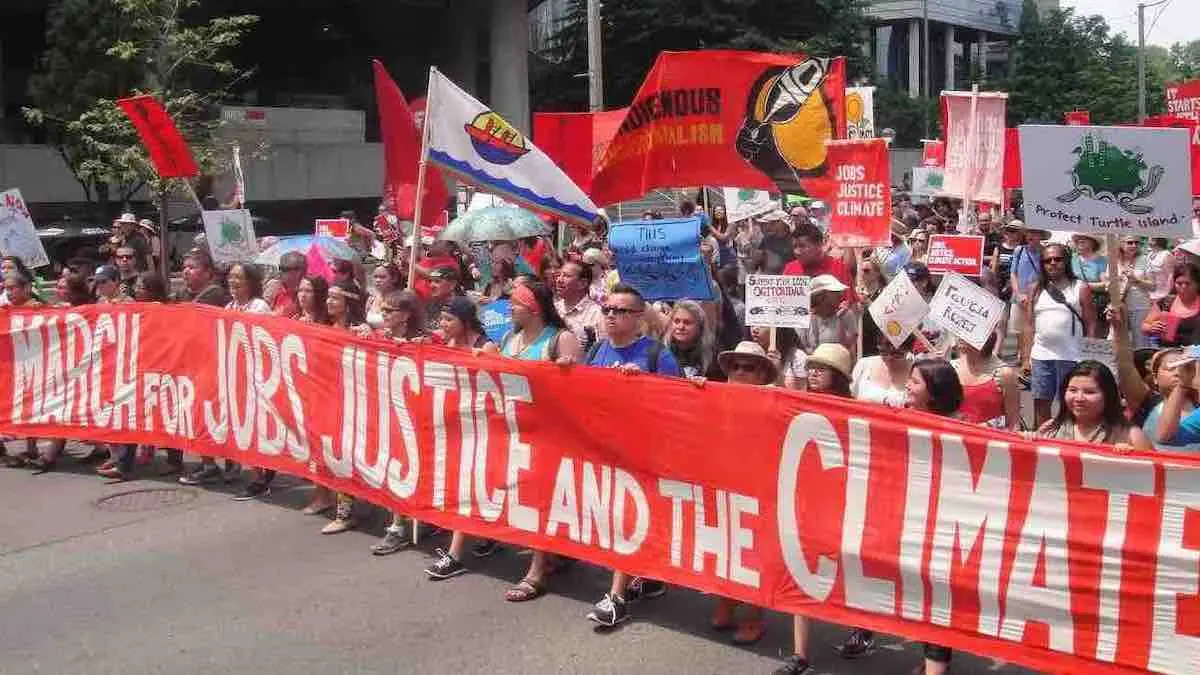
    In comparison, eco-socialism as an ideology sees the need for economic justice and environmental stewardship as inseparable. It argues that social transformation must be accompanied by a holistic approach to managing the environment, including creating laws and regulations that reduce resource consumption, energy use, and pollution. Eco-Socialists are particularly concerned about climate change and its impact on marginalised communities.

    Climate Change and Eco-Socialism

    As climate change has emerged as a dominant political issue, an increasing number of people have become involved in Green Left politics. The worsening climate crisis will continue to attract more people to a politics that is both progressive and environmentally sustainable. Capitalism has led us into the climate crisis, rampant consumerism, and environmental destruction. Eco-socialism offers us a path out of it.

    capitalism environmental destruction
    Capitalism and Environmental Destruction

    Eco Socialism Books

    The 1992 Earth Summit revealed that the entrenched interests driving Western capitalism remain unwilling to fundamentally alter their objectives or practices to foster an ecologically sustainable or socially equitable world. To challenge this, the green movement must articulate a clear eco-socialist political vision.

    In Eco-Socialism, David Pepper offers an anthropocentric framework for advancing green politics and environmental activism. Rejecting biocentrism, oversimplified limits to growth theories, and overpopulation narratives, this work outlines the foundations of a radical eco-socialism while critiquing the shortcomings of postmodern green politics and deep ecology. By synthesising Marxist, anarchist, and deep ecological thought, Eco-Socialism provides a comprehensive guide for students of ecology, political theory, and environmental studies. It presents a cohesive strategy for a transformative green agenda.

    Eco-Socialism by David Pepper

    Ian Angus

    Canadian activist and author Ian Angus has become a leading voice in the eco-socialist movement. Indeed, books by Ian include Canadian Bolsheviks: The Early Years of The Communist Party of Canada, The Global Fight for Climate Justice: Anticapitalist Responses to Global Warming and Ecological Destruction, Too Many People?

    He has also authored, Population, Immigration, and the Environmental Crisis, A Redder Shade of Green: Intersections of Science and Socialism and Facing the Anthropocene: Fossil Capitalism and the Crisis of the Earth System. In addition, Angus has travelled the world promoting eco-socialism with his books and has established the website Climate and Capitalism

    Ian Angus (Eco-Socialist)
    Ian Angus (Eco-Socialist)

    Michael Löwy

    Michael Löwy’s Ecosocialism: A Radical Alternative to Capitalist Catastrophe is an essential, urgent, and brilliantly clear manifesto for anyone seeking a coherent and principled political response to the planetary emergency. Löwy articulates the foundational argument that the ecological crisis is not a technical bug in the system. It is the direct and inevitable outcome of capitalism’s insatiable logic of endless growth, accumulation, and commodification. He masterfully synthesises the core insights of Marxist critique with the dire warnings of ecological science. He posits that a politics serious about preventing catastrophe must move beyond mere regulation and toward a radical democratic transformation of our productive and social relations.

    The great strength of the book is its powerful, accessible vision of an alternative. Löwy defines eco-socialism as a revolutionary project that places use-value and ecological sustainability above exchange-value and profit. He advocates for a democratically planned economy that would enable us to collectively decide what, and how much we produce. This would mean prioritising human need and planetary health over corporate greed. This vision is both a critique and a source of genuine hope. It argues that the very depth of the crisis creates the necessity and possibility for a new society.

    While some may seek more detailed strategic road maps, the book’s purpose is as a catalytic call to action and theoretical grounding. It provides the ideological tools to understand why capitalism is ecocidal and why ecosocialism is the only logical alternative. It is an inspiring, indispensable text that equips activists, thinkers, and concerned citizens with the framework needed to connect the fights for social justice and ecological survival into a single, unstoppable struggle for a livable future.

    Democratic Eco Socialism

    Democratic Eco-Socialism is a transformative ideology that integrates socialist economic principles, ecological sustainability, and radical democracy to address both social inequality and environmental collapse. It envisions a post-capitalist society where economic life is democratically controlled, production is ecologically regulated, and justice is extended across class, race, and gender lines.

    Unlike traditional socialism, it rejects centralised authoritarianism in favour of decentralised, participatory democracy. In contrast to mainstream environmentalism, it argues that capitalism is structurally incompatible with sustainability, dismissing market fixes like carbon trading as inadequate. While sharing some concerns with deep ecology, it maintains a human-centred—though not exploitative, perspective, viewing ecological and social well-being as inseparable.

    Influenced by Marxist theory and radical Green New Deal visions, democratic eco-socialism seeks to unite labour and green movements under a common framework. Critics question its feasibility in industrialised societies, particularly the tension between democratic deliberation and urgent ecological action. Yet it remains a growing force, visible in left-green parties like Germany’s Die Linke, activist networks such as System Change Not Climate Change, and Indigenous-led struggles for just transitions.

    Eco-Socialism Example

    It’s essential to think about how eco-socialism can be implemented not just at a global level but also in different parts of society and for different communities. For example, eco-socialism can be used to create green jobs or to promote sustainable agriculture practices in rural areas.

    Additionally, eco-socialist policies can help cities become more environmentally friendly and ensure that the environment is a priority in urban planning. When investigating the implementation of eco-socialism, it’s important to think not only about what policies might work best, but also how communities or regions could benefit from them.

    Eco Socialist Countries

    The case study of Bolivia provided a valuable platform to transform theoretical understandings of eco-socialism into a more grounded analysis of how the ideology manifested itself in real-world politics.

    President Evo Morales of Bolivia (2006–2019) was a proponent of eco-socialism and believed it offered a solution to capitalist greed and the resulting climate crisis. Morales and his political party, the MAS, governed along socialist principles, marking a stark contrast to the neoliberal capitalist policies of previous administrations. His socialist-inspired development policies appeared successful, evidenced by Bolivia’s rising economic growth and literacy rates, alongside declining poverty and child mortality figures.

    Beyond his anti-capitalist stance, Morales was also a committed advocate for environmental protection. It was during his presidency that Bolivia passed the Law of Mother Earth in 2012, which recognised nature as sacred and entitled to legal protection from exploitation. The law sought to establish a vision of harmonious coexistence between humans and the natural world, ensuring the Earth’s capacity to regenerate its ecosystems. This legislation stood as a clear example of Bolivia’s dedication to sustainable development and Morales’ eco-socialist approach.

    Evo Morales with supporters
    Evo Morales and supporters

    Ecosocialist Manifesto

    The idea for this eco-socialist manifesto was first conceived jointly by Joel Kovel and Michael Löwy during a September 2001 workshop on ecology and socialism in Vincennes, near Paris. We all find ourselves trapped in Gramsci’s paradox: living through an era where the old order is dying – and dragging civilisation down with it – while the new one struggles to be born. Yet if that new order cannot yet emerge, it can at least be proclaimed.

    The gravest shadow looming over us is neither terrorism, environmental collapse, nor global recession, but rather the internalised fatalism that insists no alternative to capital’s world order is possible. It was this conviction that moved us to articulate a form of discourse that consciously rejects the prevailing mood of nervous compromise and passive resignation.

    Yet this manifesto lacks the boldness of its 1848 predecessor, for eco-socialism is not yet a spectre haunting Europe, nor is it anchored in any concrete party or movement. At present, it remains merely a line of reasoning – an interpretation of the current crisis and the essential steps for transcending it. We make no pretence of omniscience. On the contrary, our aim is to provoke dialogue, debate, and refinement – above all, to explore how this vision might be realised.

    Across the fractured landscape of global capital, countless points of resistance arise spontaneously. Many embody ecosocialist principles in their very essence. How might these fragments coalesce? Could we dare to imagine an “Ecosocialist International”? Might the spectre yet take shape?

    You can read the Eco-socialist Manifesto published by Capitalism Nature Socialism as an example of a manifesto that may be worthy of support.

    Ecosocialism Flag

    The eco-socialist flag is a symbol that combines elements of environmental and socialist ideals. There isn’t a universally recognised version, but many variations share common themes. Typically, eco-socialist flags feature:

    1. Green Colour: Representing the environment and sustainability.
    2. Red Colour: Symbolizing socialism and workers’ movements.
    3. Nature Symbols: Such as trees, leaves, or the earth, indicating the environmental focus.
    4. Socialist Symbols: Like the hammer and sickle or other representations of collective ownership and solidarity.

    Some designs might also incorporate imagery of renewable energy sources or a more stylised representation of nature and human cooperation. The exact design can vary depending on the specific group or movement using the flag.

    eco socialism flag
    Eco Socialism Flag

    Eco-Socialist Party

    With humanity seemingly at a cross-road, eco-socialists are increasingly putting themselves forward for public office. More and more eco-socialists are coming forward to challenge the capitalist system. In Australia, they are coming both from within the Australian Greens and minor parties such as Socialist Alliance and Socialist Alternative, which both provide a Marxist critique of the current environmental criss.

    The Australian Greens, commonly known as The Greens, are a confederation of Green state and territory political parties in Australia. The Greens are the third-largest political party in Australia by vote and the fourth largest by elected representation. The Greens have moved further to the left in recent years. They have adopted policies that would increasingly move Australia towards Eco-Socialism.

    The decline of the red scare and an increased focus on the climate emergency suggest there are fewer barriers to their success than before. Indeed, if we are to survive climate change eco-socialism must succeed.

    Ecosocialism PDF

    Karl Marx Ecosocialism: Capital, Nature, and the Unfinished Critique of Political Economy. by Kohei Saito is available as a pdf. It is a go to resource for anyone seeking an in-depth understanding of ecosocialism.

    Ecosocialism Quotes

    “Nothing scares neoliberals more than radical science allied with social movements, but until such a union arises, they have little to fear.” – Troy Vettese

    “He that plant trees love others besides himself.” – Thomas Fuller

    “One of the first conditions of happiness is that the link between man and nature shall not be broken.” – Lev Tolstoj

    “The Earth is a fine place and worth fighting for.” – Ernest Hemingway

    “The miracle is not to fly in the air or to walk on water, but to walk on the Earth.” – Chinese proverb

    Ecosocialism polcompball

    The Polcompball subreddit is for artists and casual browsers. It has drawings involving spheroids representing political ideologies.

    Ecosocialism: Critique what a Revolution would look like?

    An ecosocialist revolution would be a profound and transformative process, a protracted shift aiming to dismantle capitalism while averting ecological collapse. It would likely emerge from a constellation of mass movements; climate strikes, Indigenous land defenses, and labor struggles, that build alternative, resilient institutions and strategically disrupt the fossil fuel economy. ‘

    The core transformative phase would involve a radical restructuring, seizing and democratising state power to expropriate ecocidal industries like fossil fuels and agribusiness, replacing market anarchy with democratic, participatory planning at all levels. This would entail a rapid, publicly managed phase-out of fossil fuels alongside a guaranteed just transition for workers, a shift to agroecology, and massive investment in renewable energy and public transit.

    Ultimately, it seeks to establish a steady-state economy operating within planetary boundaries, organised as a confederation of democratic communes where production meets human need rather than generates profit. This revolution would be globally minded, demanding reparations and technology transfer from the Global North to the South, and would foster a cultural shift from consumerism to community, sufficiency, and care. While fraught with challenges—including international reaction, the tensions between urgency and democracy, and the need for deep systemic change—it represents a radical project to heal the metabolic rift between society and nature, founding a future on the principles of equality, freedom, and ecological sustainability.

    Other References

    Other Relevant Information

    Socialist Australia

  • Australian Socialists

    Australian Socialists

    Home » Australian Socialism

    Examples of Socialism in Australia

    There are a number of prominent Australian Socialists working hard for a fairer distribution of wealth in a country experiencing increased income inequality and an unprecedented housing crisis. So we look at these leftists, starting with MPs serving in the Australian Parliament.

    MPs in Parliament in Australia

    Mehreen Faruqi is a Pakistani-born Australian politician and former engineer who moved to Sydney in 1992. Faruqi joined the Greens and was elected to the NSW Legislative Council in 2013, serving until 2018. While there she was a vocal pro-choice advocate, introducing the first parliamentary bill to decriminalise abortion in New South Wales in June 2014.

    Filling a casual vacancy, Faruqi was sworn in as a Senator on 20 August 2018, becoming the first female Muslim senator in Australian history. Since June 2022, Faruqi has served as Deputy Leader of the Australian Greens.  Faruqi later led her Greens colleagues in a Senate walkout, protesting the Albanese government’s refusal to call for a ceasefire to the 2024 Israel–Hamas war.

    What are examples of socialism in Australia?

    Two examples of socialist policies are Medicare and the NDIS which cover all Australians and provide much needed support, funded by the state. Public owned utilities are also consistent with socialist ideology, as opposed to the capitalist agenda of privatisation.

    Is Australia socialist or capitalist?

    Australia is neither socialist or capitalist. Australia has a mixed economy.

    Australian Socialists from History

    Henry Lawson (17-6-1867 to 2-9-1922) was a famous Australian writer and bush poet. A socialist and a republican, Lawson regularly contributed to The Bulletin. Indeed, many of his works helped popularise the Australian vernacular in fiction.

    Lawson wrote prolifically into the 1890s, but after this his output declined. However, he was the first Australian writer to be granted a state funeral. His more political ballads published in the Bulletin included, ‘The Song of the Outcasts’ (1888), ‘Faces in the Street’ (1888) and ‘The Hymn of the Socialists’ (1889).

    Fred Patterson

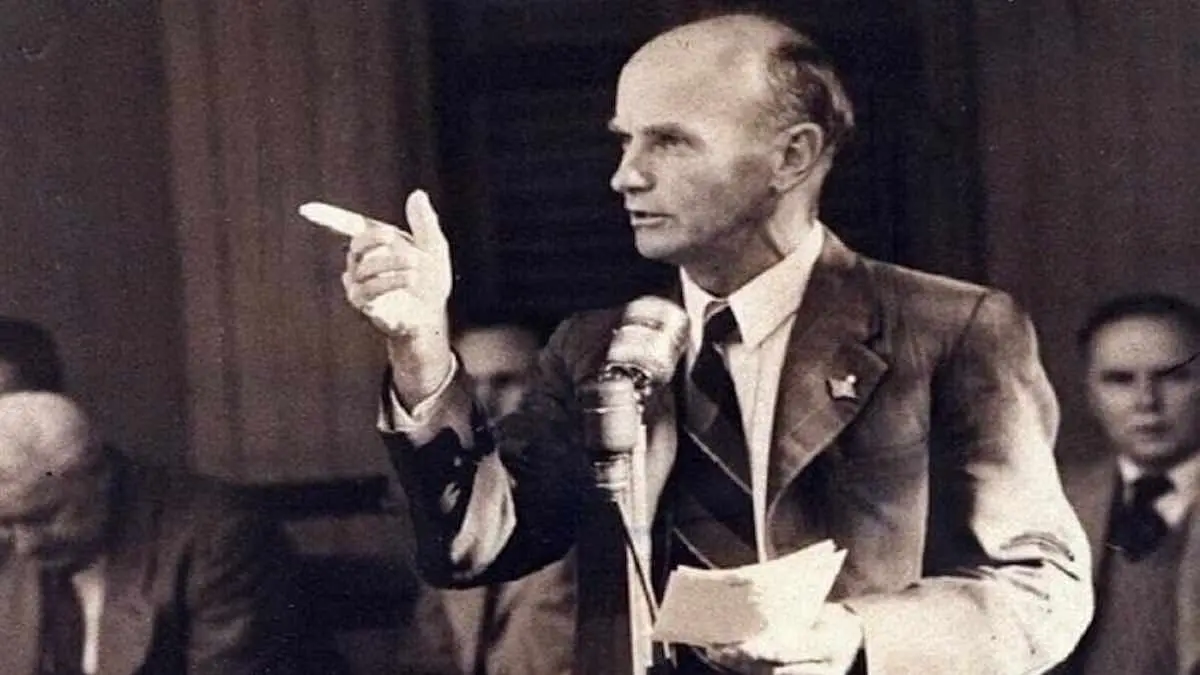
    Fred Paterson was the only communist ever elected to an Australian Parliament. Indeed his story is a remarkable one. Initially Fred was politicised by the First World War. During the war, he saw workers on each side of the front line massacring each other for no reason, at the behest of a ruling class.

    Paterson won the seat of Bowen in the 1944 state election, defeating the ALP incumbent. In one of his first speeches to parliament he said, “Socialism is in accordance with the highest and noblest traditions and ideals of mankind. But socialism cannot be imposed upon the people by a minority. It is a movement in the interests of the vast majority and will come into existence only when a majority of the people want it and are organised sufficiently to obtain and maintain it”.

    On St Patrick’s Day 1948, while taking part in a rally of railway workers, Paterson was attacked by a plain clothes policeman. His skull was bashed in with a police baton. His injuries were so severe that he was not expected to survive. This police violence marked the end of Paterson’s political career, as he struggled to recover from his injuries. The government also redrew the boundaries of his electorate, making it unwinnable for him.

    Tom Aikens and Fred Paterson
    Tom Aikens and Fred Paterson

    Serving Australian Socialists

    A number of Australian Socialists hold office at local government level.

    Owen Cosgriff

    A proud member of Victorian Socialists, Owen Cosgriff was elected to the Greater Bendigo City Council as the representative for Whipstick Ward in 2024. Owen received a first preference vote of 40.7% in a field of three and got up with 52.7% after preferences.

    Owen Cosgriff
    Owen Cosgriff – Bendigo Council

    Stephen Jolly

    Stephen Jolly (born 1962) is an Australian politician, socialist activist, author and construction worker. He currently serves as the mayor of Yarra and has been a councillor of the City of Yarra since 2004, initially representing Langridge Ward before being elected to MacKillop Ward in 2024.

    Stephen Jolly is an Australian Socialist
    Stephen Jolly

    Rob Pyne

    Rob Pyne was first elected as a Councillor to Cairns Regional Council in 2008. He then contested the 2015 state election for the ALP against a conservative opponent. Consequently, he was elected to represent the electorate of Cairns in the State Parliament, where he served one term.

    However, Rob believed the major political parties had neglected Far North Queensland and were not doing enough on the issues of climate change and  local government corruption. As a result, he resigned from the Australian Labor Party (ALP) in 2016 becoming an Independent. However, without major party support (and following an unfavourable boundary change), he lost his seat at the subsequent election.

    Pyne returned to local government, being elected as a Councillor to Cairns Regional Council in 2020, this time in Division 2.

    Socialist Alliance Party Australia

    The Australian Socialist Alliance has members across the nation, including two members serving on local councils.

    Sue Bolton was first elected to Merri-Bek Council in 2012. She has lived in Merri-Bek for 13 years and is passionate about supporting residents – especially residents who have low incomes, are unemployed, have disabilities, are Indigenous, are homeless, new migrants, young people and women.

    Sue is also passionate about improving council services and creating a fair cohesive and proudly multicultural community.

    Australian Socialists: Sue Bolton
    Australian Socialists: Sue Bolton

    Sarah Hathway is a Australian Socialist Alliance member. Indeed, she has been active in this socialist party and in a range of campaigns in the north and across Geelong in relation to defending community services, environmental issues, social housing, revitalising community spaces and opposing racism. An experienced organiser and long-term community campaigner, Sarah was later elected Councillor for the Corio Ward on City of Geelong Council.

    Sarah Hathway
    Sarah Hathway

    Other Socialist Leaders

    Max Chandler-Maher was elected to parliament in 2022 as the Member for Griffith. He has been outspoken on the issue of housing. While Max lost his seat at the 2025 federal election, he remains a great talent from the left and has a remarkable work ethic.

    Max Chandler-Mather
    Max Chandler-Mather

    Jordan van den Lamb initially became well-known by his online alias Purple Pingers. A lawyer, social media activist, and socialist candidate, he later gained widespread recognition for his advocacy on housing issues, tenants rights and the genocide in Palestine.

    Jordan Van Den Lamb
    Jordan Van Der Lamb

    Jorge Jorquera

    Jorge began his political activism at age 14, in the Carina branch of the Labor Party in Brisbane. Like thousands of others, he left the Labor Party in protest at the Hawke government’s Accord, which spearheaded the neoliberal policies that have shaped politics in Australia ever since.

    In his early years Jorge was elected secretary of the University of Queensland Student Union and coordinator of the National Free Education Coalition, which led the national campaign against the reintroduction of university fees. Subsequently, he helped establish one of the first Greens Party branches in NSW. Jorge served as a member of Victorian Socialists and a Councillor in the City of Maribyrnong (2020-24)

    Jorge Jorquera
    Australian Socialists: Jorge Jorquera

    Sam Wainwright: Australian Socialist

    Sam Wainwright is a disability support worker and former councillor at the City of Fremantle. Before that he was a wharfie for over 12 years and is making opposition to the WA Government’s proposed closure of Fremantle Port one his campaign priorities. Sam was proud to be part of Fremantle council opening up an honest discussion about the significance of January 26 for Indigenous Australia and the country’s history. He added, “This is barely the beginning, we need reconciliation based on a treaty with real land rights.” 

    Australian Socialists: Sam Wainwright
    Australian Socialists: Sam Wainwright

    Australia Socialist Party

    At the national level, there are three political parties that campaign for socialist policies:

    The Socialists

    The newly formed political grouping The Socialists believe working-class people deserve a society in which we are guaranteed the things we need to live a decent life, including secure, affordable housing, education, healthcare and more.The group is not registered nationally, but is currently forming branches in each state and territory.

    Victorian Socialists

    The Victorian Socialists were formed in February 2018, with the official registration by the Victorian Electoral Commission taking place in June 2018.

    The party was formed out of an electoral alliance between Socialist Alternative and the Socialist Alliance, along with community activists and trade unionists. Coming together in a spirit of solidarity they formed a new political party.

    NSW Socialists

    The NSW Branch is currently in the process of registering to stand candidates in that state.

    South Australian Socialists

    The South Australian Branch registered as a political party in 2025 . It offers a left-wing alternative for South Australian voters.

    Canberra Socialists

    The registration process has begun in the ACT with membership growing strongly.

    WA Socialists

    The WA Socialists are currently in the process of registering to stand candidates in that state.

    Democratic Socialist Party (Australia)

    The Democratic Socialist Perspective (DSP) was an Australian socialist political group. It was founded in 1972 as the Socialist Workers League (SWL), changing its name to the Socialist Workers Party (SWP) a few years later. In the early 1990s it was once again renamed, as the Democratic Socialist Party, and in 2003 it became the Democratic Socialist Perspective. The DSP operated as the largest component of a broad-left socialist formation, the Socialist Alliance, until in 2010, it voted to merge into the Socialist Alliance.

    Is Australia Socialist or Capitalist?

    Australia is not a socialist country, nor is it completely capitalist. Australia is best described as having a mixed economy.

    Relevant Material

    Other Material

    Socialist Australia

  • Fred Paterson was a Communist Hero

    Fred Paterson was a Communist Hero

    Home » Australian Socialism

    Frederick Woolnough Paterson

    Fred Woolnough (Fred) Paterson (13 June 1897 – 7 October 1977) was the only communist ever elected to an Australian Parliament. He possessed a legendary intellect, work ethic and political ability. We look at his amazing life and times.

    The Early days

    Fred Paterson was born in Gladstone in 1897. He attended Gladstone State School where he excelled, before earning a scholarship at Brisbane Grammar School. A prize-winning student, Paterson was then awarded a Rhodes Scholarship to study at Oxford and could easily have become a wealthy barrister. However, Fred’s only goal in life was to improve the lives of working people and advance the cause of socialism.

    As a young man, Fred suspended his study to volunteer for what he then believed to be his ‘patriotic duty’ to fight in the First World War. However, young Fred soon became politicised by the war. He saw workers on each side of the front line massacring each other for no reason, at the behest of a wealthy ruling class.

    Who was Fred Paterson?

    Frederick Woolnough Paterson (Fred Paterson) was an Australian politician. A Queensland MP, activist, unionist and lawyer, Fred Paterson was the only Communist ever elected to an Australian Parliament.Fred Paterson

    Fighting Racism and Fascism

    Fred Paterson returned to Australia and took a leading role in the fight against fascism. It was his work as a barrister and politician defending the rights of unemployed migrants that forged his reputation.

    Queensland had the highest number of Italian immigrants of any state. New arrivals, having escaped Mussolini’s fascist regime, often moved north from Brisbane looking for work. As a result, Australia’s first anti-fascist march was held in the Far North Queensland town of Halifax in 1925. While the government cracked down on these radical protestors, Fred stood in solidarity with them

    Fred Paterson and the Red North

    The stretch of Queensland from Mackay to Cairns was in the 1930s and 40s known as “The Red North”. During this time the Communist Party of Australia (CPA) was the driving force behind the Unemployed Workers’ Union. This union provided assistance that helped many ordinary people to survive the Great Depression, which had caused poverty and suffering around the world.

    Unemployed Workers Union
    Great Depression (US Picture)

    The Australian Communist Party gained wider support when communist trade union leaders ran strong campaigns which won increased pay and improved conditions for workers in the mines and the cane fields.

    In 1933 a deadly epidemic of Weil’s disease broke out on a number of Queensland sugar cane farms. Cane cutters and their families lived in constant fear of the disease. Burning the cane before harvesting was the best way to control outbreaks, but it also reduced the sugar yield, thus reducing the profits of cane growers. Growers campaigned against burning crops, shamefully winning support from both the ALP state government and the Australian Workers Union (AWU).

    Australian Communists Strike

    Anti-migrant racism resurfaced in 1931 when cane farmers and the conservative Australian Workers’ Union (AWU) struck a deal to prioritise British subjects over Italians for farm work. Fred Paterson challenged the legality of the agreement. In 1933, cane cutters resolved to strike in response to a deadly outbreak of Weil’s disease. By August 1935, 2,000 workers had brought sugar mills to a standstill. When the state government refused relief to sacked workers, the Communist Party of Australia (CPA), working through the unions, organised fundraising, communal kitchens, and accommodation.

    The bosses broke the strike by July 1936. They evicted workers from their quarters and employed scab labour. While the battle had been lost, the war was later won by workers, when an order to burn cane before harvesting was handed down by the industrial court. The strike had raised the profile of the CPA in Queensland Politics and fuelled resentment towards the Australian Labor Party (ALP). Paterson’s support for the cane cutters helped him win election to the Townsville local council in 1939.

    Working with allies from a left-wing group within the ALP, Fred Paterson had enough influence on the council to make real improvements for local people. This included providing cheap stoves for Townsville workers, as well as establishing public libraries, a swimming pool and a public ice works (when the military took over the existing one during the war).

    Aboriginal and Torres Strait Islander Ally

    Paterson explained in his memoir that, for him, practising law was always a part-time pursuit. Indeed, he spent most of his time working for the Party: “Between cases I did an enormous amount of work for the Communist Party, addressing meetings all over North Queensland”. Fred attended meetings in towns from the coast to the Northern Territory border. Two of Fred’s many clients were Joe McGinness and Tiger O’Shane. Fred was a strong ally of Aboriginal and Torres Strait Islander people.

    Fred Paterson Communist Party

    The Australian Government banned the Communist Party in 1940. As a result, it became an offence for Paterson to publicly address a crowd. During a visit to Cairns at this time, Paterson used his legal experience and creativity to work around this problem. He addressed a meeting of locals while standing on a table, metres off the Cairns Esplanade. He knew the local constabulary could not enforce the Communist ban on him, because he was beyond the high-water mark, so outside their territorial jurisdiction.

    Fred Paterson Elected

    In the 1944 state election, Paterson was elected to the seat of Bowen defeating the ALP incumbent Dick Riordan. During his time as the Member for Bowen in the Queensland Parliament Fred criticised the Labor Party for not strongly representing working people especially during the Queensland railway strike.

    Paterson declared in one of his first speeches to parliament in 1944, “Socialism is in accordance with the highest and noblest traditions and ideals of humanity. But socialism cannot be imposed upon the people by a minority. It is a movement in the interests of the vast majority and will come into existence only when a majority of the people want it and are organised sufficiently to obtain and maintain it”.

    While a Member of Parliament, Fred worked closely with Tom Aikens, the then Member for Mundingburra who had also served as an alderman on Townsville City Council.

    Tom Aikens and Fred Paterson
    Tom Aikens and Fred Paterson

    Fred Paterson Attacked

    The biggest test for Paterson came in 1947 and 1948 with the Queensland rail strike. Rail unions applied for a flow-on of a pay rise won by metalworkers under federal awards. The ALP Hanlon government, despite Hanlon being a former railway worker himself, refused their claims. Workers struck in response.

    Determined to defeat the strike, the State Government launched a propaganda campaign against the rail workers. The government accused workers of being taken in by a communist plot.

    In support of the railway workers, Paterson took shifts on the picket line every morning, offering the strikers legal advice and using Parliament to publicly defend the strikers.

    Plain clothes policeman attacked Paterson in Brisbane on St Patrick’s Day 1948, while he was taking part in a rally to support railway workers. The police bashed his head with a police baton. His injuries were so severe that he was not expected to survive.

    ALP and capitalist press join forces against Australian Communist

    Premier Hanlon expressed his indignation at the demonstrators’ behaviour and his admiration for the police. He called the events “a deliberately provoked brawl by the communist element which saw defeat staring it in the face. I have reports of their [police] tolerance, patience and care in handling people during this difficult period”.

    The violence marked the end of Fred Paterson’s political career. He struggled to recover from his injuries. The ALP government also redrew the boundaries of his electorate, making it unwinnable for him. Finally, Paterson’s story of struggle and resistance guarantees his place as the only Australian Communist ever elected to an Australian Parliament.

    Brisbane Telegraph 1948
    Brisbane Telegraph 1948

    The Legend of Fred Paterson

    The film “The Legend of Fred Paterson” combines extensive historical footage and stills with recreations of seminal events in Paterson’s life, as well as interviews with old communist comrades and his two surviving sons.

    There is little actual archive of Paterson himself, apart from badly damaged video of him talking about the assault in 1975. The film contains interesting archive footage of events in Russia and Germany, as well as areas and towns in North Queensland.

    Relevant Material

    Other Material

    Socialist Australia

  • Australian Socialist Alliance

    Australian Socialist Alliance

    Home » Australian Socialism

    Australian Socialist Alliance Party

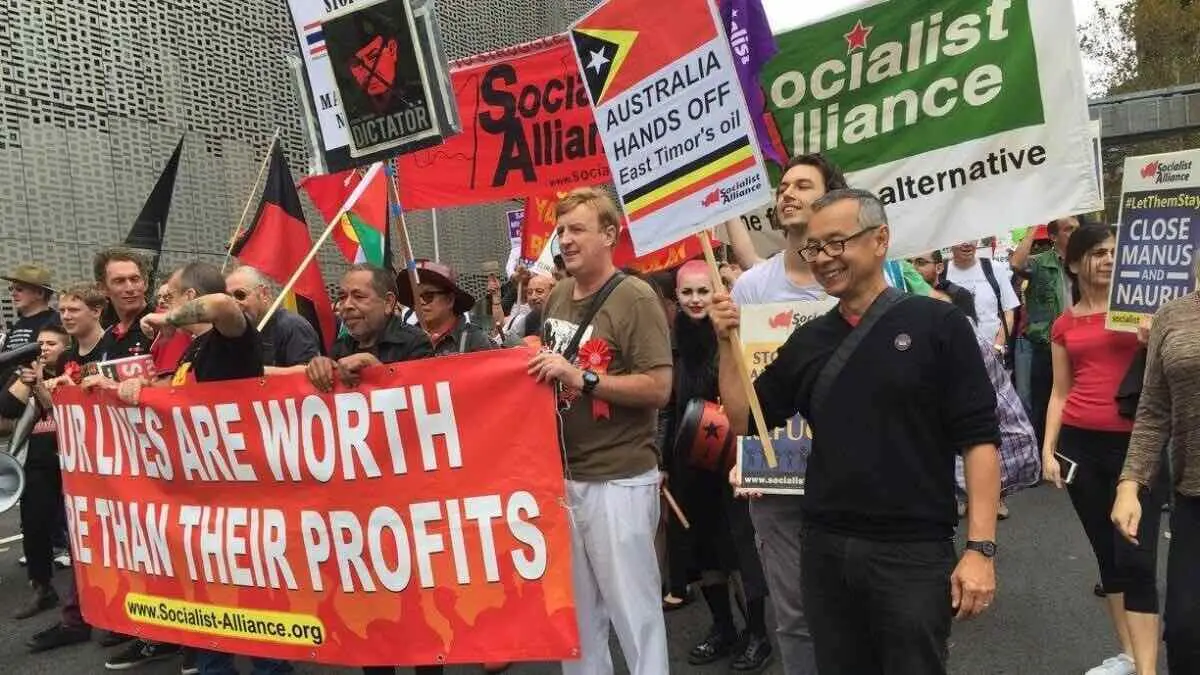
    There are alliances of socialists working together around the world. However, the Australian Socialist Alliance is a political party that stands for a democratic society run by and for working people, not the greedy, destructive capitalist elite that now rules. Their catch-cry is “We put people and the planet before profit, the millions before the billionaires”.

    Since 2001, members of the Australian Socialist Alliance have been active in campaigns for workers’ rights, for women’s rights and environmental protection.

    Democratic Socialist Party (Australia)

    The Democratic Socialist Perspective (DSP) was an Australian socialist political group. They were established in 1972 as the Socialist Workers League. Later the name was changed to the Socialist Workers Party (SWP). In the early 1990s it was once again renamed, as the Democratic Socialist Party, and in 2003 it became the Democratic Socialist Perspective.

    The DSP worked as the largest part of a broad-left socialist formation, until 2001, when its members voted with a number of other socialist organisations to merge into Socialist Alliance.

    What does the Socialist Alliance party Stand for?

    They campaign for civil liberties, justice for Aboriginal and Torres Strait Islander peoples, and refugees, opposing racism. The party also stands for policies that advance rights of gays, lesbians, trans and intersex people, for equal marriage rights, and for international solidarity with the oppressed. Australian Socialist Alliance members are leaders in many of these movements.

    Australian Socialist Alliance emphasises international solidarity with socialist and progressive movements around the world. Hence it opposes imperialism, war, and militarism, and supports struggles for self-determination, democracy, and social justice globally. Supporting global socialism is crucial for Socialist Alliance.

    Socialist Alliance Policies Australia

    Australian Socialist Alliance is open and transparent with their policies and update them online if they are changed at National Conference.

    Socialist Alliance Leadership

    Socialist Alliance is made up of people who, like millions of others, are sick of being ruled by the warmongers, racists, union-bashers, and capitalist politicians. Hence many of these progressive leftists find a political home in the Australian Socialist Alliance.

    Engaging in a combination of grassroots activism and electoral politics, Socialist Alliance currently has three elected officeholders across Australia. These are councillors Sarah Hathway (City of Greater Geelong) Sue Bolton (City of Merri-bek) and Sam Wainwright served as a Socialist Alliance councillor on the City of Fremantle until 2021.

    Australian Socialist Alliance: Sam Wainwright
    Australian Socialist Alliance: Sam Wainwright

    Socialist Alliance Candidates

    Socialist Alliance has fielded candidates in federal, state, and local elections across Australia. Some notable examples include:

    Federal Elections

    • Sam Wainwright (Fremantle, WA – 2022)
    • Susan Price (Sydney seats, multiple elections)
    • Andrew Charles (Melbourne seats, 2010s)
    • Jonathan Strauss (Queensland Senate, 2025)

    State Elections

    • Sue Bolton (Victoria, Northern Metro – 2022, 2018)
    • Kamala Emanuel (NSW, Newtown – 2015)
    • Shua Garfield (WA, South Metropolitan – 2021)

    Local Government

    • Sue Bolton (Moreland City Council, Vic – elected 2012 re-elected multiple times)
    • Sam Wainwright (Fremantle Council, WA – previously elected)
    • Jacob Andrewartha (Hobart City Council, Tas – 2018)

    The Alliance often runs in working-class and progressive urban electorates. While rarely winning seats, they use campaigns to promote socialist policies (e.g., public housing, climate action, workers’ rights). However, some members, like Sue Bolton, have been elected to local councils.

    Australian Socialists: Sue Bolton
    Australian Socialists: Sue Bolton

    Regarding office bearers, the organisation’s recent co-convenors were Jacob Andrewartha, Sue Bull, and Sam Wainwright.

    Australian Socialist Alliance candidates

    Green Left

    Socialist Alliance supports the independent progressive newspaper, Green Left. So GL covers the issues and campaigns that Socialist Alliance members are involved in. This support is a key initiative of the Australian Socialist Alliance.

    Green Left  (GL) is widely recognised (within and beyond Australia) as one of the most authoritative left-wing weekly English-language sources of news and political analysis. indeed, GL  carries weekly news and analysis and is essential reading for members and activists engaged in broad left and green debate and discussion across Australia and internationally. Australian Socialist Alliance Members are encouraged to help distribute Green Left and sell subscriptions.

    green left newspaper
    Green Left Newspaper

    Socialist Alliance Members

    Socialist Alliance promotes socialist policies and aims to address issues like inequality, environmental sustainability, and workers’ rights. So the party operates through various branches and local groups that help organise and mobilise support for its initiatives. Consequently, these branches form the backbone of the Australian Socialist Alliance, representing members from North Queensland to Tasmania and from Perth to Sydney.

    Each branch functions somewhat independently but adheres to the core principles and policies of the national party. If you’re looking for specific branches or contact information, it’s usually best to visit the Socialist Alliance website or contact their national office directly for the most up-to-date details. They often have information on local branches, upcoming events, and ways to get involved with the Australian Socialist Alliance.

    Socialist Parties Australia

    In Australia, several political parties identify with socialist principles. They include:

    Socialist Alliance – A more explicitly socialist party, the Socialist Alliance promotes a range of leftist policies, including workers’ rights, environmental justice, and anti-capitalism.

    Socialist Alternative – This party aims to promote a democratic socialist agenda and focuses on social and economic equality.

    Victorian Socialists – VS also promotes a socialist agenda and focuses on social and economic equality and sustainability.

    Communist Party of Australia (CPA) – Although much smaller than it once was, the CPA advocates for Marxist-Leninist principles and has been part of the socialist movement in Australia.

    Leftists within the Greens – The Australian Greens have a faction that aligns with socialist principles, focusing on social justice, environmental issues, and anti-capitalist rhetoric.

    These parties vary in their ideologies, strategies, and levels of influence within the Australian political landscape.

    Socialist Alliance vs Socialist Alternative

    The key differences between these parties are:

    • Electoral Strategy: Socialist Alliance participates in elections as a registered party, while Socialist Alternative focuses more on activism and direct action.
    • Ideological Approach: Socialist Alliance promotes a democratic socialist framework, while Socialist Alternative leans towards a more revolutionary and Trotskyist ideology.

    Both organisations contribute to the broader socialist movement in Australia but cater to different segments of the left.

    Victorian Socialists VS Socialist Alliance

    Victorian Socialists and the Australian Socialist Alliance are two distinct leftist political parties. The key differences between then are the Victorian Socialists specifically targets the state of Victoria, while Socialist Alliance operates nationally across Australia. So they were formed in different contexts and have different historical backgrounds, influencing their strategies and organisational structures. However, there are signs of unity behind a new electoral popular front – Socialists Australia.

    The Socialists Australia

    The Victorian focus of Australian socialists has changed in recent years with new state branches being launched in states across the nation, including Queensland Socialists. This is done with the aim of running candidates to increase the socialist vote.

    Currently, having registered in Victoria and South Australia, organisers of The Socialists are setting up new parties in ACT, NSW, NT, Queensland, Tasmania and WA.

    Queensland socialists

    Is Australia Socialist or Capitalist

    Australia is a capitalist country with a mixed economy, meaning it combines elements of both capitalism and socialism. Here’s a breakdown:

    • Private Ownership: Most businesses are privately owned, and the market operates on supply and demand.
    • Global Trade: Australia is deeply integrated into the global capitalist system, with major exports like minerals, agriculture, and services.
    • Strong Welfare State: Australia has universal healthcare (Medicare), unemployment benefits, and public education.
    • Government Regulation: Certain industries (like utilities and transport) have government involvement or oversight.
    • Progressive Taxation: Higher earners pay a larger share of taxes to fund social programs.

    Australia is primarily capitalist but incorporates socialist-leaning policies to ensure social welfare and reduce inequality. Therefore, it’s best described as a social democracy (like Canada or the Nordic countries), where a free-market economy coexists with robust public services.

    Relevant Material

    Other Material

    Socialist Australia

  • Australian Left Parties and People

    Australian Left Parties and People

    Home » Australian Socialism

    Australian Left Politics

    The Australian left played a crucial role in Australian history, from pre-federation and for the first half of the 20th century. However, since the middle of the 20th century, mainstream Australian politics has been dominated by two political parties, the centrist ALP and the Conservative LNP.

    The left has come a long way since the early days of the labour movement. In recent history progressive politics has again gathered traction, with a growing number of Australians advocating for policies that prioritise social justice, environmental protection, and human rights.

    Which party is in power in Australia?

    The Australian Labor Party (ALP) is Australia’s oldest political party. It emerged from the socialist tradition, but after adopting neoliberal reforms the party is now widely considered a ‘centrist’ political party. The ALP currently forms government in Australia.

    Australian political system diagram
    Australian political system diagram

    What are the 5 Major Political Parties in Australia?

    These were the largest five registered parties by vote at the 2025 Federal Election:

    1. Australian Labor Party
    2. Liberal Party of Australia
    3. The Greens
    4. Liberal National Party of Queensland
    5. The Nationals

    Australian Left Parties

    In more recent times, new socialist parties have emerged. Following increased awareness of social issues, and a growing sense of urgency around climate change, the Australian left has become a diverse and dynamic movement. Left parties today include the Australian Greens, Socialist Alliance and Victorian Socialists:

    Current Australian Political Parties

    Right now, there are 32 political parties officially registered with the Australian Electoral Commission (AEC). But out of those, only nine actually have seats in Federal Parliament. The major players you’ve probably heard of are the ALP, the Liberals, and The Nationals.

    List of Australian Political Parties

    You can obtain a full list of parties registered nationally from the Australian Electoral Commission website.

    Australian Left Wing Media

    Below is a list of some Australian left wing media outlets. You can get a more exhaustive list at our post on Socialist Media.

    Red Flag Radio
    Red Flag Radio

    Resistance Books is an Australian based non-profit, progressive book publisher and distributor.

    Resistance Books aims to publish both a range of the classic works of Marxism and socialism as well as titles dealing with contemporary issues from a radical perspective, all in cheap and accessible editions. Currently, they have around 90 titles in print.

    Australian Socialist Websites

    Socialist Australia by Rob Pyne
    Socialist Australia by Rob Pyne

    Australian Left Unions

    Radical Environmental Groups

    Radical environmental groups operate as a grassroots presence of the larger environmental movement. They often emerge out of frustration with the co-option of mainstream environmentalism.

    Is Labor Left or Right in Australia?

    The Australian Labor Party (ALP) is a centrist political party. While many of its members hold left-wing beliefs, the party adopted light neoliberal policies in the 20th century.

    However today, the ALP does not have an agenda to nationalise industries or to dramatically increase welfare payments by taxing the super-wealthy. It maintains engagement with the private sector.

    On the national political spectrum, the ALP sits to the left of the Liberal Party, the National Party, as well as the far-right One Nation and Australia First parties. However, the ALP’s position on the spectrum is to the right of The Greens and a number of smaller parties, which now represent much of Australia’s remaining socialist movement.

    Is Liberal left or right in Australia?

    Australia is regarded as a liberal democracy, similar to Canada, New Zealand and other western liberal democracies.

    The Liberal Party in Australia has at various times in it’s history been dominated by liberal ideals and prominent politicians who have promoted them to voters. However, over recent years the party has moved to the right. Indeed, at present it is controlled by a conservative majority and it promotes conservative policies to the Australian people.

    Is Albanese Left or Right?

    Anthony Albanese was and remains a member of the left faction of the Australian Labor Party (ALP). Indeed, early in his career, Albanese championed progressive causes. At some point, however, he made a decision—whether consciously or not—to compromise his left-wing beliefs in pursuit of power.

    As Prime Minister, Albanese has not pursued a left-wing agenda or advanced progressive policies. He has been the definition of a centrist Labor leader—some might even call him conservative, particularly given his steadfast support for the US alliance during the tenure of the fascistic Trump administration.

    Albo no working class hero

    Socialist Women in Parliament

    There is an increasing number of women in the Australian Parliament as well as in the government. In terms of gender, there are 69 women in the House of Representatives. This is consistent with a trend of increased female representation in Parliament House. However, most socialist women in the Australian Parliament serve in the Senate, most notably Senators Mehreen Faruqi and Lidia Thorpe.

    Australian left politics reddit

    Australian left politics on Reddit is a vibrant and contentious space dominated by a few key communities, each with distinct allegiances.

    The largest hub, r/AustralianPolitics, while neutral in intent, features a user base that skews toward progressive and Green viewpoints, leading to heated daily debates between Labor and Greens supporters.

    The core divides mirror real-world fractures: the primary conflict is between Labor supporters advocating for the status quo and Greens supporters pushing for more radical climate and economic action, while further left socialist and communist spaces reject both groups as reformist.

    Across all these communities, you’ll find strong consensus on foreign policy criticisms, such as opposition to AUKUS and support for Palestine, but constant internal debate over strategy, the role of identity politics, and the fundamental goal of reforming versus overthrowing capitalism.

    The Future of the Australian Left

    The future of the Australian left is uncertain, but there are many reasons to be optimistic. With a growing number of young people engaging in politics and advocating for progressive policies, there is a real possibility for change in the years to come.

    However, there are also significant challenges to be faced, including the rise of right-wing populism and the ongoing threat of climate change. Hence the future of the left will depend on the ability of its leaders and supporters to mobilise and organise effectively, and to build a broad-based movement that can bring about real change.

    In conclusion, the Australian left has a rich and complex history, shaped by a variety of social, economic, and political factors. It is hard to predict the future of left politics in Australia.

    Relevant References

    Other Material

    Socialist Australia