
Table of contents
Global Socialism Meaning
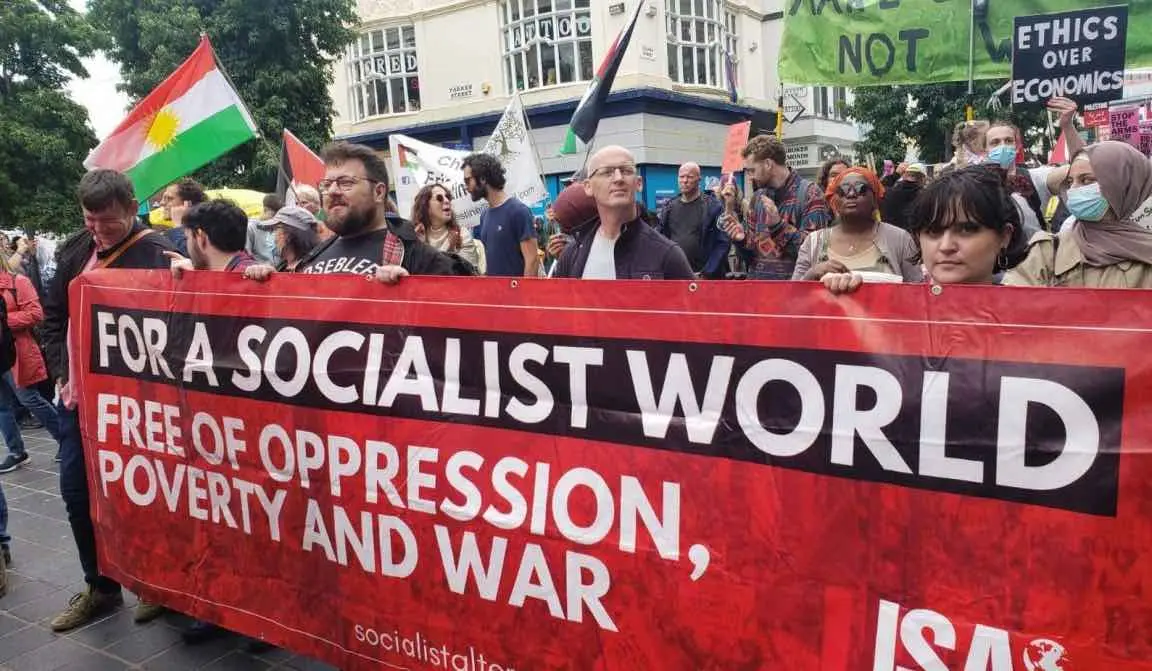
World socialism or global socialism is a political and economic ideology that advocates for the collective ownership and control of the means of production and distribution of goods and services. It involves socialist movements and governments around the world working together in a spirit of international peace and cooperation. The spirit of the movement is captured in the Socialist Anthem The Internationale.
The father of socialism is widely regarded to be Karl Marx.
Socialism vs Communism
There are many types of socialism. Communism or Utopian Communism is a very pure form of socialism, characterised as a stateless, propertyless, post-monetary economy based on calculation in kind, a free association of producers (workplace democracy) and free access to goods and services produced solely for use and not for exchange.
Types of Socialism
There have been different types of socialism proposed, but all involve some level of public ownership.
- Marxist-Leninist State socialism calls for public ownership of the means of production and distribution but allows for a certain amount of private ownership and market activity. One example of state socialism is the former Soviet Union.
- Democratic socialism calls for a socialist society that is democratically run. This is contrasted with Marxist-Leninist state socialism, whose opponents often view as being authoritarian, bureaucratic, and undemocratic in practice.
- Ecosocialism is the belief that the capitalist system is the cause of social exclusion, inequality and environmental degradation. Eco-socialists criticise many within the green movement for not going far enough in their critique of the current world system and for not being overtly anti-capitalist.
- Utopian socialism calls for public ownership and the abolition of private property in an equal society that is run according to socialist ideals.
Socialist Countries
Some countries, such as Venezuela and Bolivia, have also seen the election of socialist leaders in the 21st century. However, the resurgence of socialism has also faced criticism and challenges, particularly in the United States where it is often portrayed as a threat to individual freedoms and capitalism.
History of Socialism
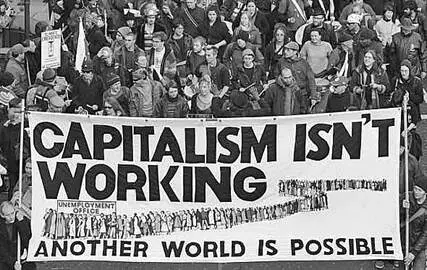
Socialism calls for public rather than private ownership of the ‘means of production’. It argues society as a whole should own, or at least control property for the benefit of all.
The French Revolution was the great bourgeois overture to the socialist project that followed. While it overthrew feudalism under the banner of liberty and equality, it installed a new ruling class, the bourgeoisie, and revealed the core contradiction between political rights and economic exploitation. This betrayal of its own ideals, embodied in laws that protected property over people, framed the central “social question” of inequality.
The radical uprising of the sans-culottes and the revolutionary plot of Gracchus Babeuf proved that the masses could act for themselves, pointing toward a future, deeper revolution. Thus, socialism emerged as the necessary heir to complete the revolution’s unfinished struggle for true human emancipation.
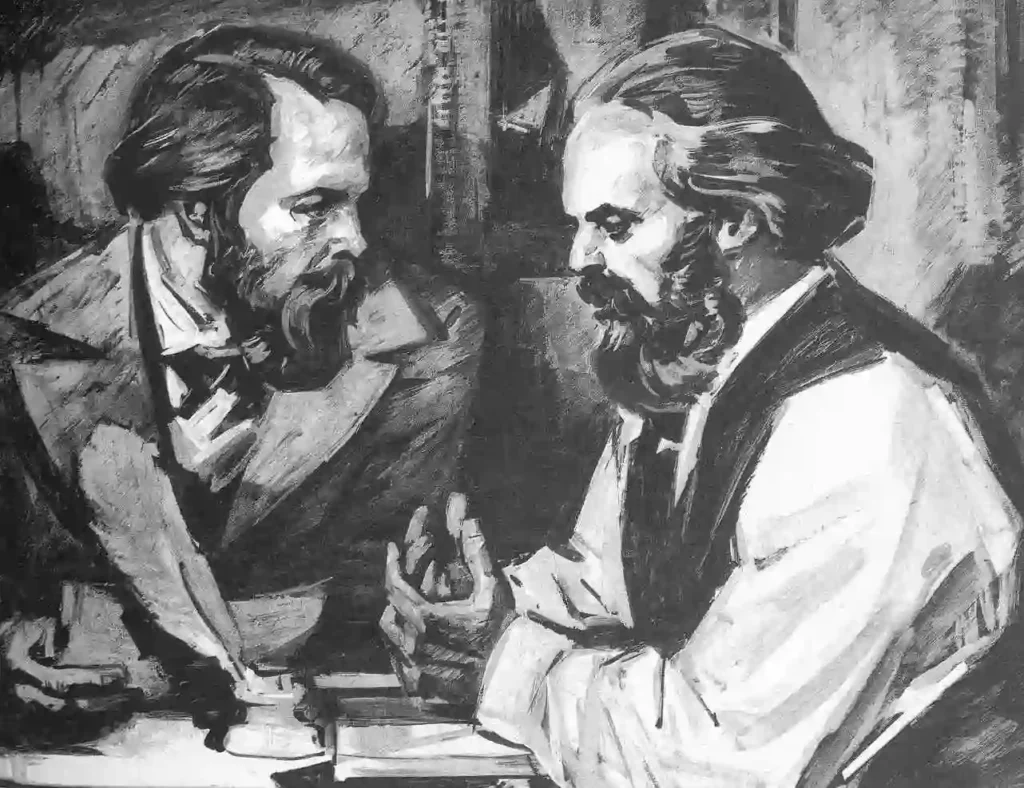
The origins of world socialism can be traced back to the writings of Karl Marx and Friedrich Engels in the mid-19th century. Their work, The Communist Manifesto, laid out the basic principles of socialism. It established the idea that capitalism was inherently exploitative. Therefore, the working class should rise up and seize control of the means of production.
Socialism Examples
The rise of socialist and communist states in the 20th century was a major development in the history of socialism. Indeed, the Soviet Union, led by the Communist Party, became a superpower and a rival to the United States.
World Socialism and Democratic Socialism Today
Here are key examples of socialist systems today:
Socialist States:
- China – Communist Party rule, “socialist market economy” with state-controlled key industries.
- Cuba – Marxist-Leninist, state-run economy, limited private sector.
- Vietnam – Socialist-oriented market economy, mix of state and private enterprise.
- Laos – One-party socialist state, gradual market reforms.
Countries with Major Socialist Policies
- Venezuela – Nationalised oil, welfare programs, economic crisis.
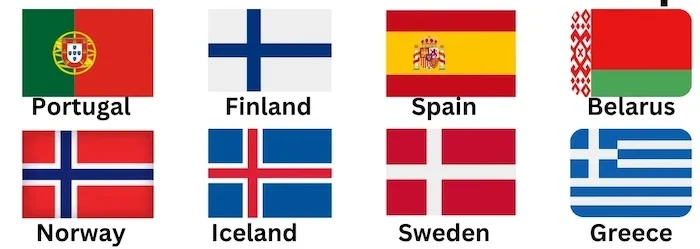
- Nordic Countries (Sweden, Norway, Denmark) – Capitalism with strong welfare states (not fully socialist). These countries have been described by some as having a form of market socialism.
Mixed Economies (Socialist-Leaning Policies)
- France,
- Portugal,
- Spain
These countries have public healthcare, labour protections, but market-driven economies.
World Socialist Movement
The World Socialist Movement (WSM) founded in 1904, seeks a more utopian outcome. The WSM seeks “a moneyless society based on common ownership of the means of production, production for use and social relations based on cooperative and democratic associations as opposed to bureaucratic hierarchies.”
The World Socialist Movement (WSM) currently consists of companion parties in four countries — the Socialist Party of Great Britain (SPGB), the World Socialist Party of the United States (WSPUS), the Socialist Party of Canada (SPC), and the World Socialist Party of India (WSPI) — and socialist groups and individuals in other parts of the world.

World Socialist Party
The World Socialist Party of the United States (WSPUS) is a socialist political organisation that was established in Detroit, Michigan as the Socialist Party of the United States in 1916. It operated as the Socialist Educational Society in the 1920s before being renamed the Workers’ Socialist Party. The organisation reemerged in the 1990s and exists today as the American companion party of the World Socialist Movement.
The aim of world socialism is to persuade others to become socialist and act for themselves, organising democratically and without leaders, to bring about a new socialist society.
The party is solely concerned with building a movement for socialism. They are not a reformist party with a program of policies to patch up capitalism. They promote marxism and aim is to build a movement working towards a socialist society. The WSP:
- Publishes literature and state our case wherever and however possible
- Participates in unions, strikes, etc. and other movements of the working class.
- Seeks to deepen and better articulate our understanding of the world.
- Since 1916 the World Socialist Party has:
- Consistently advocated a fully democratic society based upon co-operation and production for use.
- Opposed every single war
- Participated in working class struggles
- Functioned as a democratic and leaderless organisation

World Socialist Website
The WSWS is the online publication of the world socialist movement, the International Committee of the Fourth International, and its affiliated sections in the Socialist Equality Parties around the world. It launched publication in February 1998, and has been publishing continuously for the past 25 years.
World Socialist Website Bias
In an article for Radio Free Europe/Radio Liberty, Glenn Kates criticised the Russian online newspaper Vzglyad—founded by pro-Kremlin media entrepreneur Konstantin Rykov—for using an article originally published by the WSWS titled “Obama Backs State Terror Against Eastern Ukraine” to frame its broader critique of American media. Rather than citing the WSWS directly, Vzglyad linked to Axis of Logic, a website that had republished the piece. Kates characterised this tactic as Russian media amplifying fringe Western sources to lend them mainstream legitimacy, thereby reinforcing Russian narratives.
In a separate article for the socialist magazine New Politics, University of London academic Gilbert Achcar dismissed the WSWS as “pro-Putin, pro-Assad ‘left-wing’ propaganda,” combining “gutter journalism … run by a ‘Trotskyist’ cult … which perpetuates a long-worn tradition of inter-Trotskyist sectarian squabbles while serving as an apologist for Putin, Assad, and their allies.”
Responding in part to these accusations, the WSWS countered—specifically on Syria—that Achcar had “hailed these ‘revolutionaries,’ many of whom were discredited former regime figures,” while failing to “outline their political programme or explain why feudal Gulf despots, who outlaw all dissent at home, would champion a progressive revolution abroad.”